
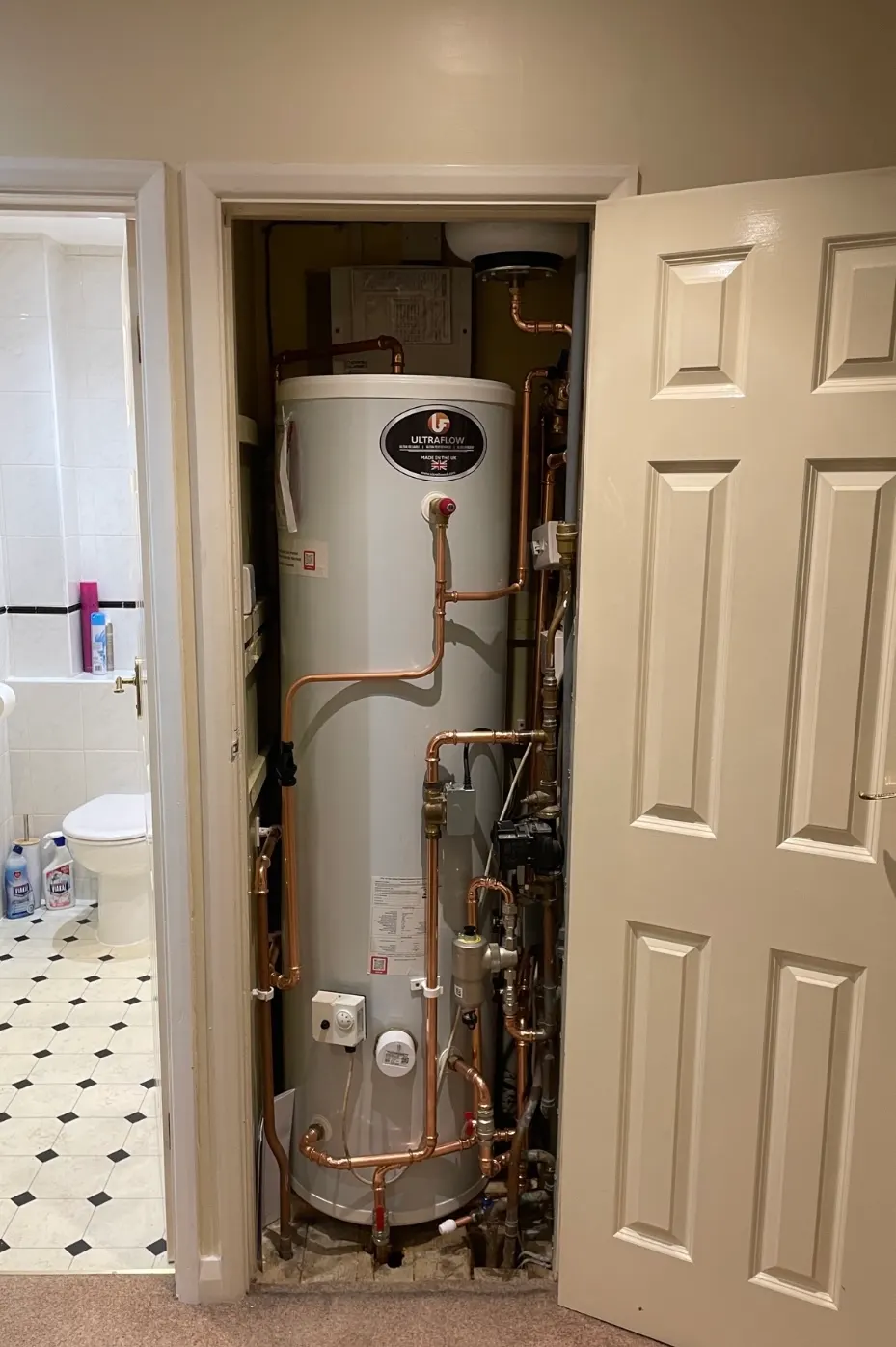
Two arrangements, different requirements
A traditional vented cylinder arrangement uses a separate cold-water storage supply. An unvented cylinder is supplied from the mains and has specific controls and safety requirements. That basic distinction is useful, but it does not tell you which arrangement is suitable for your property.
The current system, available supply, layout and household demand all need consideration. An unvented cylinder should not be presented as an automatic upgrade for every home.
Ask about the supply as well as the capacity
The cylinder’s stated capacity is only part of the decision. Explain how many outlets may run at once and whether baths, showers or other uses place particular demands on hot water.
For a proposed mains-fed installation, the incoming supply needs assessment. Choosing an appliance before the supply and installation requirements are understood risks solving the wrong problem. Do not rely on a photograph or a generic online size recommendation as a final specification.
Consider the available space
Photographs of the existing cupboard, visible connections and the cylinder label help start the discussion. Access for installation and future maintenance matters as much as whether the cylinder physically fits.
Ask what associated pipework, controls and safe discharge arrangements the proposal requires. Those are installation questions for a competent professional, not tasks to improvise after buying the appliance.
Replacement does not have to mean a complete conversion
If the existing cylinder is leaking, ageing or no longer meeting demand, discuss repair and replacement options against the actual condition and your plans. A like-for-like replacement and a change of system can involve very different work.
Our cylinder installation page explains the information to send for a quotation. If a bathroom or heating upgrade is planned, mention it so the decisions can be considered together.
Maintenance belongs in the plan
Read the instructions and warranty terms for the exact product being proposed. Heatrae Sadia, for example, recommends annual servicing for its cylinders and directs owners to the relevant product guidance. Its maintenance information is a useful example of why the model-specific requirements matter.
Do not operate, modify or block safety devices as a DIY response to a problem. Ask about the competence required for unvented work and the records you should receive. Keep those documents with the appliance instructions for future servicing.
Prepare a useful enquiry
Send your postcode, existing cylinder details, household needs and the reason for considering a change. Include photographs taken safely without removing covers. Contact Pureflo to discuss the next step across Guildford, Woking and the wider service area.
This guide is general planning information. It does not replace a site assessment, manufacturer instructions or a system design.