
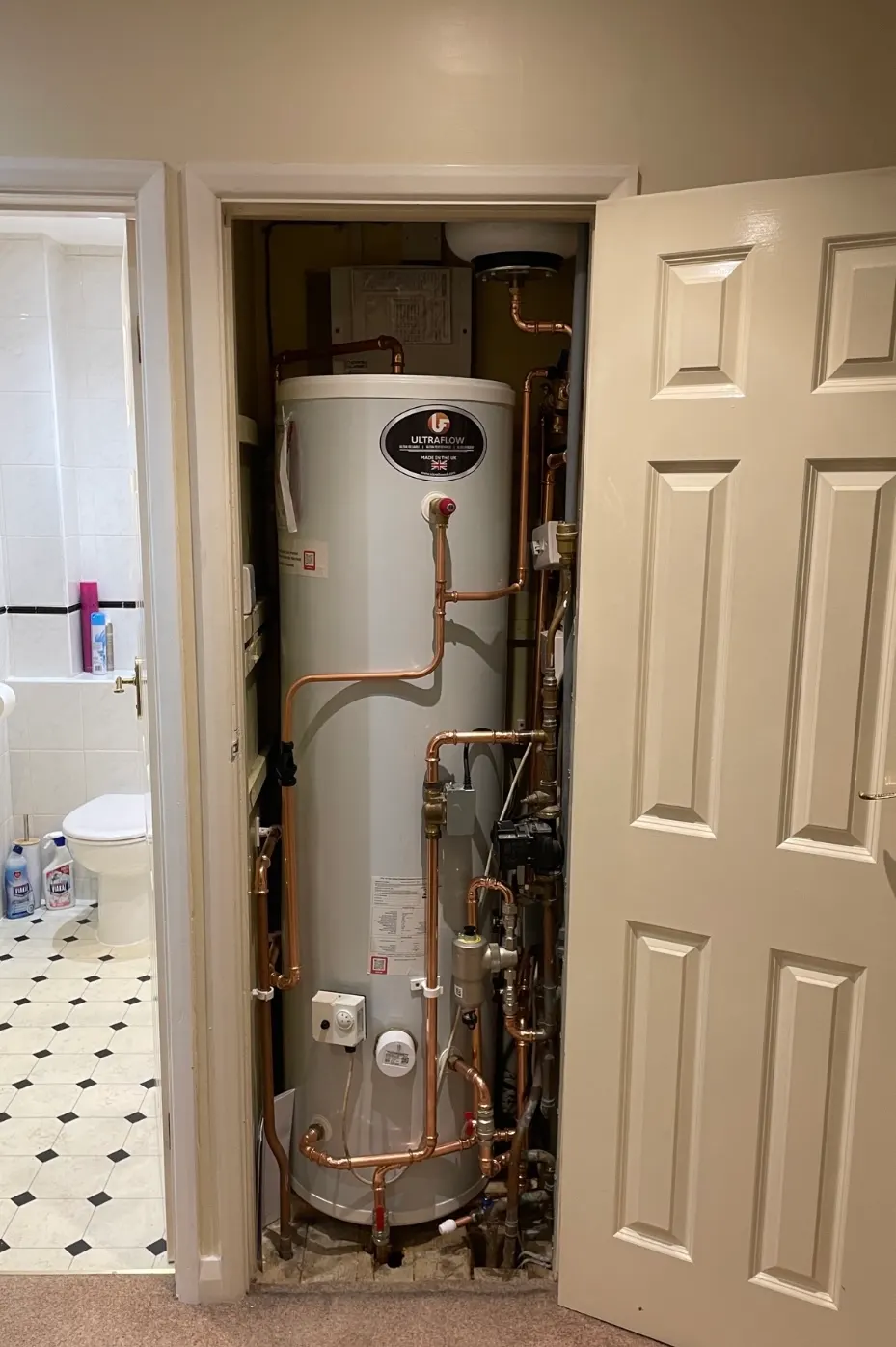
More than a new tank in the cupboard
A hot water cylinder needs to work with both the heating system and the household using it. Running out of hot water, replacing a leaking cylinder or reworking a bathroom can all be reasons to review the arrangement.
Our project gallery includes several cylinder and associated pipework installations. Take a look at the equipment and spaces involved, then tell us about the arrangement in your home.
Understanding the existing system
Before recommending a replacement, we need to know what heats your water, the type of cylinder already installed and what you want to improve. A clear photograph of the cylinder label, its cupboard and visible connections is a useful starting point.
Vented and unvented systems have different arrangements and requirements. An unvented cylinder is not a universal upgrade: the incoming supply and the proposed installation need to be suitable. Our vented and unvented cylinder guide explains the questions worth asking without trying to specify a system remotely.
Capacity, access and future plans
Think about how many people use the property, how often baths are filled and whether several outlets may be used at once. Tell us about planned bathrooms or extensions as well as the current demand.
The physical space matters too. Cupboard dimensions, a practical route for getting equipment into position and access for future maintenance all affect the proposed work. Existing pipes and valves may need attention during replacement, so send a wider photograph as well as a close-up of the cylinder.
Agreeing the work and keeping it maintainable
A useful quotation describes the proposed cylinder, controls and associated alterations. It should explain the expected hot water interruption and whether removing the old cylinder and making good are included.
Unvented hot water work requires the relevant competence and safety arrangements. Ask who will complete and certify the installation where required, and what records you will receive at handover.
Once installed, keep the product details and handover paperwork together. The manufacturer’s maintenance instructions should guide future cylinder servicing, rather than treating the new cylinder as something that never needs attention.
Talk through your replacement
Send your postcode, the cylinder make and model if known, the problem you are experiencing and a few photographs. We can then discuss the next step and whether a visit is needed. Prepare a cylinder enquiry or explore our wider coverage area.